The Pleasure of Knowing What You Like
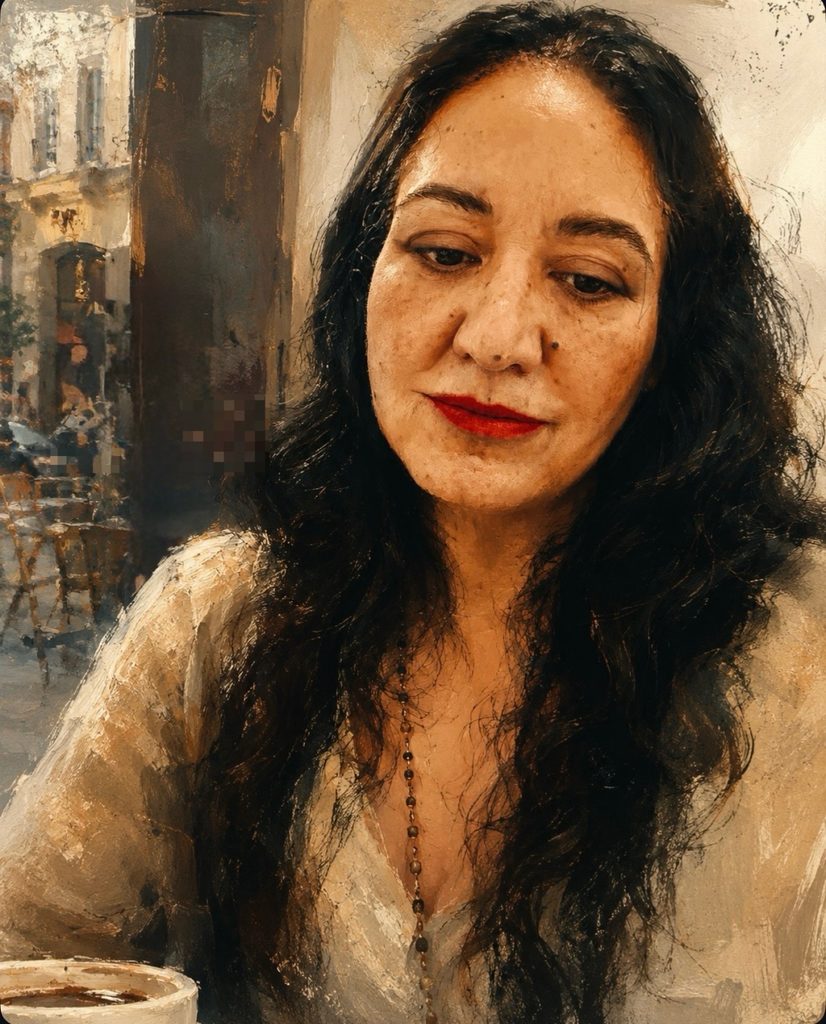
Taste becomes interesting when it stops being performance.
There are things I have liked for a very long time.
Certain voices. Certain rooms. Certain flowers. A particular way of sitting in a café. Books I return to even though there are hundreds I have not read. Music I recognise within a few bars and immediately want to hear again.
And there are things I can admire without wanting them anywhere near my own life.
That distinction has become more interesting to me with age.
When we are younger, taste can be strangely public. We learn what is considered sophisticated, fashionable, important or cool. We discover the books one should have read, the restaurants one should know, the designers one should recognise.
None of that is necessarily bad. Other people introduce us to things. Culture is partly passed from one person to another.
But somewhere along the way, another question becomes more useful:
Do I actually like it?
Not: is it good?
Not: do other people approve?
Not even: can I explain why?
Simply: does something in me respond to it?
This is not an argument for staying safely with what we already know. Quite the opposite.
Curiosity matters precisely because it gives us more to choose from.
Listen to music you have never heard. Eat something unfamiliar. Walk into the gallery whose name means nothing to you. Read outside the section you usually visit. Sit in a different part of town.
But after all that openness, we are still allowed to have preferences.
Perhaps cultivation lies somewhere between those two things: curiosity and discernment.
Being interested enough to keep looking, and attentive enough to notice what stays.
Over time, certain patterns appear.
The colours we repeatedly choose.
The places where we immediately relax.
The people whose conversation leaves us more awake rather than more tired.
The music we turn up.
The meal we order again.
The shirt we wear until somebody finally tells us it really has to go.
These small preferences are not terribly important individually. Together, however, they begin to form something recognisable.
A life that looks like ours.
Taste becomes less interesting when it is used to establish superiority. Knowing an obscure record does not make somebody more cultivated. Neither does preferring a tiny neighbourhood restaurant to a famous one.
The interesting part is attention.
Why this and not that?
Why does one room make us want to stay while another, objectively beautiful, leaves us unmoved?
Why does a song from thirty years ago still reach us while something technically perfect disappears the moment it ends?
We do not always need an answer.
Sometimes liking something is enough.
And perhaps there is a quiet freedom in reaching the point where we no longer feel obliged to persuade anybody else.
You can love what you love.
You can change your mind.
You can discover something at fifty-eight that would have meant nothing to you at twenty-five.
You can dislike something everybody else appears to adore.
Good taste, if there is such a thing, is not a finished collection of approved things.
It remains curious.
But it also becomes personal.
Cultivation is not knowing what one is supposed to like. It is paying enough attention to discover what one actually does.
Rooted in Depth. Radiating Light.