Cultivation Is Practiced
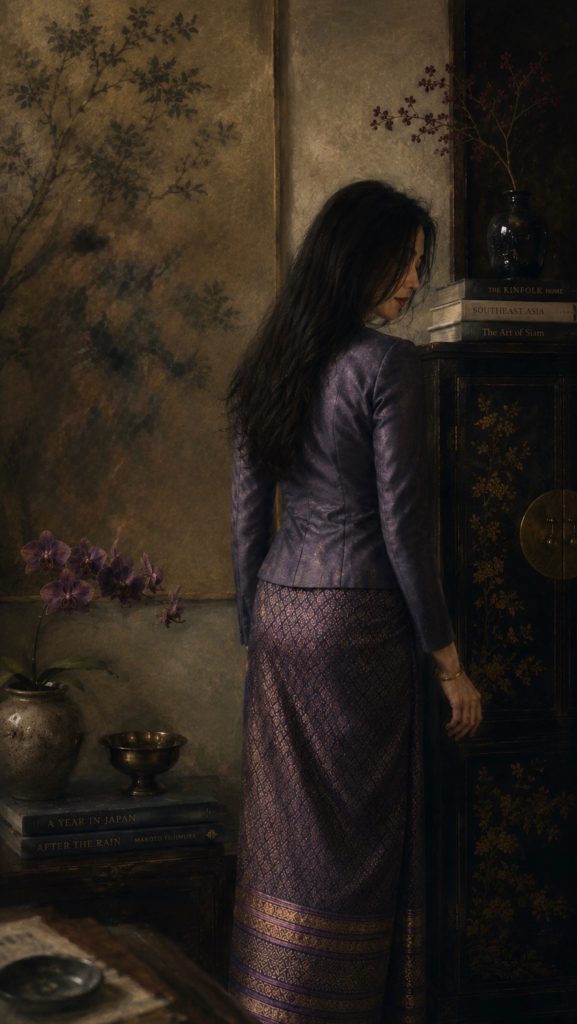
There are things we inherit without choosing them.
A language heard in childhood.
The way a table is set.
A piece of silk folded in a cupboard.
The books our parents kept.
The music that played in another room.
Some of it stays with us. Some of it disappears for years and returns when we are old enough to recognise its value.
But inheritance alone does not make a cultivated life.
Cultivation asks something of us.
What We Choose to Learn
I have always been curious about the world.
Books, music, art, clothes, language, history. Not because knowing these things makes a person superior, but because attention makes life larger.
There is a difference between consuming something and wanting to understand it.
You can hear a song.
Or you can wonder who made it, where they came from, what they listened to before they found their own sound.
You can wear a piece of silk.
Or you can know something about the hands, history and traditions behind it.
Curiosity changes our relationship with the world.
It turns possession into appreciation.
Taste Is Developed
We speak about taste as though some people simply have it.
I don’t think that is entirely true.
Taste develops through exposure, attention and time.
It changes when we read beyond what is familiar. When we listen carefully. When we enter a gallery without needing to understand everything immediately. When we travel and notice how other people live.
We learn what moves us.
We also learn what does not.
That discernment is part of cultivation.
Not everything beautiful needs to belong to us. Not everything fashionable deserves our attention. Not everything expensive has value.
The cultivated life is not built through accumulation.
It is built through selection.
What We Preserve
Thai silk was part of my family long before I understood what it represented.
My mother wore it. The women in my family wore it. This summer, I wore a sarong that belonged to my great-grandmother and is around one hundred years old.
As a child, these things did not feel exceptional. They were simply there. Fabric, colour, a certain way of dressing.
Things we grow up with often seem ordinary because we have no other life against which to measure them.
Years later, we see differently.
We begin to understand that what felt ordinary was also history. Culture. Craft. Family.
A piece of fabric can outlive the woman who wore it and still carry something of her world into ours.
Perhaps this is one of the privileges of growing older.
We become more careful with meaning.
Not sentimental about everything.
But more able to recognise what deserves to remain.
A Cultivated Life Is an Active One
Cultivation is not a performance of refinement.
It is practice.
We read.
We listen.
We ask questions.
We change our minds when we learn more.
We take care of what matters and allow our taste to become more precise.
We remain curious.
Nobility is inherited. Cultivation is practiced.
The first may tell us something about where we come from.
The second tells us what we choose to do with our lives.
Rooted in Depth. Radiating Light.